
How Do You Choose the Right Motorized Projector Lift for Your AV Project?
Many AV projects fail when the lift does not match the room or projector. You face extra costs and poor image quality. Clear steps help you avoid these problems.
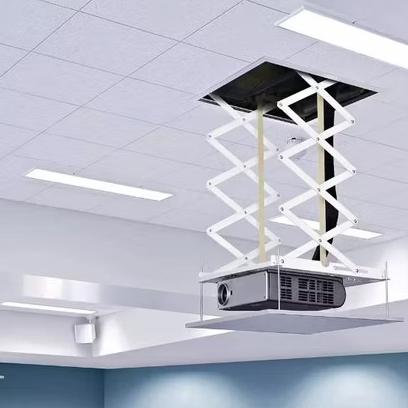
You choose the right motorized projector lift by checking load capacity, travel distance, ceiling type, safety features and projector size. Scissor-type lifts work well for most standard rooms. Telescopic-type lifts suit high ceilings and multi-device setups.
I talk with distributors and integrators every week. They often share the same concerns about cost and reliability. The points below come from real projects I handle with partners in Brazil, India and Vietnam. They help you pick a lift that works for a long time.
What Key Factors Should You Consider Before Buying a Motorized Projector Lift?
Wrong factors lead to returns and lost time. Projectors hang too low or cables tangle. You need a short list of clear checks before you order.
Check load capacity, drop distance, cable management, ceiling space and control options first. These five points decide if the lift fits your project and stays reliable for years.
I always start with the full weight of the projector plus bracket and cables. Then I ask for ceiling height and the open space above the false ceiling. Scissor-type lifts keep a compact size. Their cabinets often measure around 250 by 230 mm or 450 by 388 mm. They hide easily and cost less. Cables stay fixed on the scissors. This design works for most classrooms and offices. Telescopic-type lifts need more space but look cleaner. Their cabinets range from 280 by 250 by 200 mm up to 730 by 480 by 210 mm. They use automatic cable receivers. These receivers handle power, CAT6, USB, HDMI and SDI. One partner in Brazil used to order only scissor models. After one high-ceiling job they switched to telescopic. The clean finish helped them win more corporate work. I also check control needs. Simple remote control works for most rooms. Some projects need RS232 or dry contact for central systems. Always list these points in your first message to the supplier. It cuts wrong orders by a large margin.
Core Factors at a Glance
| Factor | Why It Matters | Scissor-Type Example | Telescopic-Type Example |
|---|---|---|---|
| Load capacity | Protects motor and gears | 10-50 kg | Up to 50 kg |
| Drop distance | Matches ceiling height | Short to medium | ≥3 meters |
| Cable management | Stops tangles and signal loss | Fixed on scissors | Automatic 1-2 receivers |
| Ceiling space | Fits void depth | Compact cabinet | Larger but clean look |
| Control options | Matches room system | Remote or wall switch | Remote + RS232 ready |
These factors form the base of every good order. Skip one and you risk extra shipping costs later.
How Important Are Load Capacity and Travel Distance in Projector Lift Selection?
Under-sized lifts fail early. Over-sized ones waste money. Wrong travel distance leaves the image too high or too low. Exact numbers keep the system safe.
Load capacity must exceed projector weight by at least 20 percent. Travel distance must match ceiling height minus ideal lens position. These two numbers decide long-term stability and image quality.
I weigh the full assembly every time. A 20 kg projector needs a lift rated for at least 25 kg. Our scissor models cover 10 kg for light units up to 50 kg for heavy business projectors. Telescopic models also reach 50 kg and support larger frames. Travel distance needs the same care. Measure from the finished ceiling to the best lens height. Add a small buffer. In a normal 3-meter room you may need only 1 meter of travel. In a 5-meter auditorium you need 3 meters or more. Scissor lifts handle short and medium drops with high stability. Their X-shape frame keeps the projector level. Telescopic lifts extend farther because the column segments slide smoothly. They keep balance even at long drops. One distributor in Pakistan ordered a short-drop lift for a tall hall. The image sat 40 cm too high. They changed the unit and lost two weeks. Now they send ceiling photos and weight data first. That habit saves time for both sides. Always add the weight of cables and any extra bracket. The total decides the real capacity you need.
Load and Travel Decision Guide
| Projector Weight | Min Capacity Needed | Typical Travel Need | Best Lift Type |
|---|---|---|---|
| Under 10 kg | 15 kg | Short (<2 m) | Scissor |
| 10-25 kg | 30 kg | Medium (2-3 m) | Scissor or Telescopic |
| 25-40 kg | 50 kg | Long (≥3 m) | Telescopic |
| Over 40 kg | 50 kg or custom | Long (≥3 m) | Telescopic |
Use this table as a first filter. Then confirm the exact model with your supplier.
What Safety Features and Installation Requirements Matter Most for AV Projects?
Weak safety features cause accidents and downtime. Poor install leads to noise and drift. Strong features protect people and equipment.
Look for stable frames, quiet motors, emergency stop and solid ceiling anchors. Proper install needs enough void depth, correct power supply and clear cable paths. These points keep the system safe every day.
I check three safety points on every lift. First is the frame strength. Scissor lifts use multiple X-arms that lock the projector from side to side and front to back. Telescopic lifts use rigid tubes that keep the load centered. Both types need a rated motor that stops under overload. Second is noise level. Quiet motors under 45 dB keep meeting rooms calm. Third is emergency control. A manual override or wall switch lets you lower the unit if power fails. Installation needs equal care. Measure the void depth from the finished ceiling to the first joist or duct. Scissor lifts fit in smaller spaces. Telescopic lifts need more height but give cleaner results. Power must match the local voltage. Most units run on 110 V or 220 V. Cable paths must stay free of sharp edges. One system integrator in Vietnam had a lift that drifted after three months. The cause was a weak ceiling anchor. They fixed the mounts and the problem stopped. I always ask partners to send a photo of the ceiling structure. It shows if the joists can hold the weight. Good install also includes a small service gap so you can reach the motor later. These steps cut service calls and keep clients happy.
Safety and Install Checklist
| Item | What to Check | Why It Matters |
|---|---|---|
| Frame stability | Multi-arm or rigid tube | Stops side movement |
| Motor protection | Overload stop and quiet run | Protects gears and people |
| Emergency control | Manual override or wall switch | Works when power fails |
| Ceiling anchor | Joist or solid deck strength | Holds full load safely |
| Void depth | Enough space for full retract | Allows clean hide |
| Power and cables | Correct voltage and free path | Prevents heat and tangles |
Follow this list before the lift arrives. It makes the install smooth and safe.
How Do You Match a Motorized Projector Lift to Your Ceiling Type and Projector Size?
Mismatched ceiling and projector size force last-minute changes. The image looks wrong and the ceiling looks messy. Correct matching keeps the room clean and the picture sharp.
Match the lift cabinet size to your ceiling opening and void depth. Match the mounting plate to your projector bolt pattern and weight. Scissor lifts suit standard false ceilings. Telescopic lifts suit high or clean ceilings.
Ceiling type decides the lift shape. Standard false ceilings with limited void depth work best with scissor lifts. Their small cabinets fit 24 by 24 inch grids and stay hidden. High ceilings or open structures favor telescopic lifts. The long column keeps the ceiling surface smooth and supports drops over 3 meters. Projector size needs the same attention. Measure the projector length, width and height. Check the bolt pattern. Most units use common VESA or universal plates. Heavy or long-lens projectors need a stronger base plate. Our scissor models handle most mainstream projectors up to 50 kg. Telescopic models also reach 50 kg and accept extra brackets for PTZ cameras or small displays. One client in India ordered a scissor lift for a large laser projector. The plate was too small. They added a custom adapter and delayed the job. Now they send the projector model number first. I check the plate size against our options and confirm the match. Always leave a small gap around the cabinet for air flow and future service. This simple check keeps the install clean and the lift ready for years of use.
Ceiling and Projector Matching Table
| Ceiling Type | Void Depth Need | Best Lift Type | Projector Size Fit |
|---|---|---|---|
| Standard false ceiling | Small to medium | Scissor | Most mainstream up to 50 kg |
| High open ceiling | Medium to large | Telescopic | Heavy or multi-device |
| Tight grid (24x24) | Compact only | Scissor | Light to medium |
| Clean high-end room | Flexible | Telescopic | Any size with clean cables |
Send your ceiling photo and projector model early. The right match saves time and cost for everyone.
Conclusion
Check factors, load, travel, safety and match. The right motorized projector lift keeps every AV project stable and clean.